
Market Access Strategy Is Now a Growth Imperative
Market access strategy has moved from operational function to board-level priority.
In today’s environment, regulatory approval does not guarantee commercial success. Pricing, reimbursement, and payer adoption determine whether innovation translates into revenue. As health systems tighten budgets and value scrutiny increases, companies that fail to prioritise market access early are seeing delayed launches, restricted coverage, and eroded margins.
For life sciences leaders, market access capability is now directly linked to growth predictability.
Why Market Access Determines Launch Success
Strong market access strategy starts long before submission.
When access leaders shape evidence plans and clinical strategy early, organisations improve their probability of:
- Health technology assessment approval
- Sustainable pricing
- Reimbursement durability
- Faster patient uptake
Late-stage access involvement often leads to retrofitted value narratives and weaker payer positioning. Early integration drives stronger return on R&D investment and reduces launch risk.
This is not a functional adjustment. It is a structural shift in how portfolios are governed.
Asia Market Access Requires Local Precision
Market access in Asia cannot be approached with a single regional template.
Singapore, Thailand, Malaysia, and Vietnam operate under different payer systems, affordability constraints, and policy maturity levels. Public and private funding dynamics vary significantly. Some markets are strengthening formal value assessment frameworks, increasing evidence expectations and pricing scrutiny.
A global pricing strategy without local adaptation will fail.
Winning in Southeast Asia requires:
- Country-specific evidence positioning
- Tailored payer engagement models
- Deep understanding of evolving health policy
- Regional coordination with local execution authority
Organisations that invest in local market access capability outperform those that centralise decisions too heavily.
The Market Access Talent Gap Is a Competitive Risk
Demand for experienced market access professionals is rising faster than supply, particularly across Asia.
Senior market access roles require a combination of clinical literacy, health economics expertise, policy navigation, and executive stakeholder influence. These skills are scarce and transferable, making competition intense.
Most companies respond by competing for the same limited talent pool. This drives cost inflation but does not expand overall capability.
The real challenge is not hiring. It is building.
Companies that develop structured market access career pathways, internal mobility routes, and early exposure to portfolio strategy create sustainable advantage. Those that rely solely on external recruitment remain constrained.
What High-Impact Market Access Leaders Do Differently
High-performing market access leaders demonstrate:
- Critical evaluation of evidence beyond published endpoints
- Deep understanding of healthcare system mechanics
- Comfort operating within policy uncertainty
- Ability to influence cross-functional stakeholders
There is no universal playbook. Effective access strategy depends on product lifecycle, therapeutic area, and market structure. Judgment and system thinking matter more than job titles.
The Strategic Decision for CEOs
From a board perspective, market access capability should influence:
- Portfolio governance decisions
- Launch sequencing
- Succession planning
- Regional expansion strategy
Key indicators of strength include reduced launch delays linked to reimbursement, increased internal promotion into senior access roles, and improved payer credibility across priority markets.
Market access is no longer a technical function managed at the margins.
It is a growth engine.
Organisations that expand the market access talent pool rather than simply competing for it will launch more predictably, defend pricing more effectively, and build future commercial leaders.
The companies that recognise this shift early will shape the market. The rest will react to it.
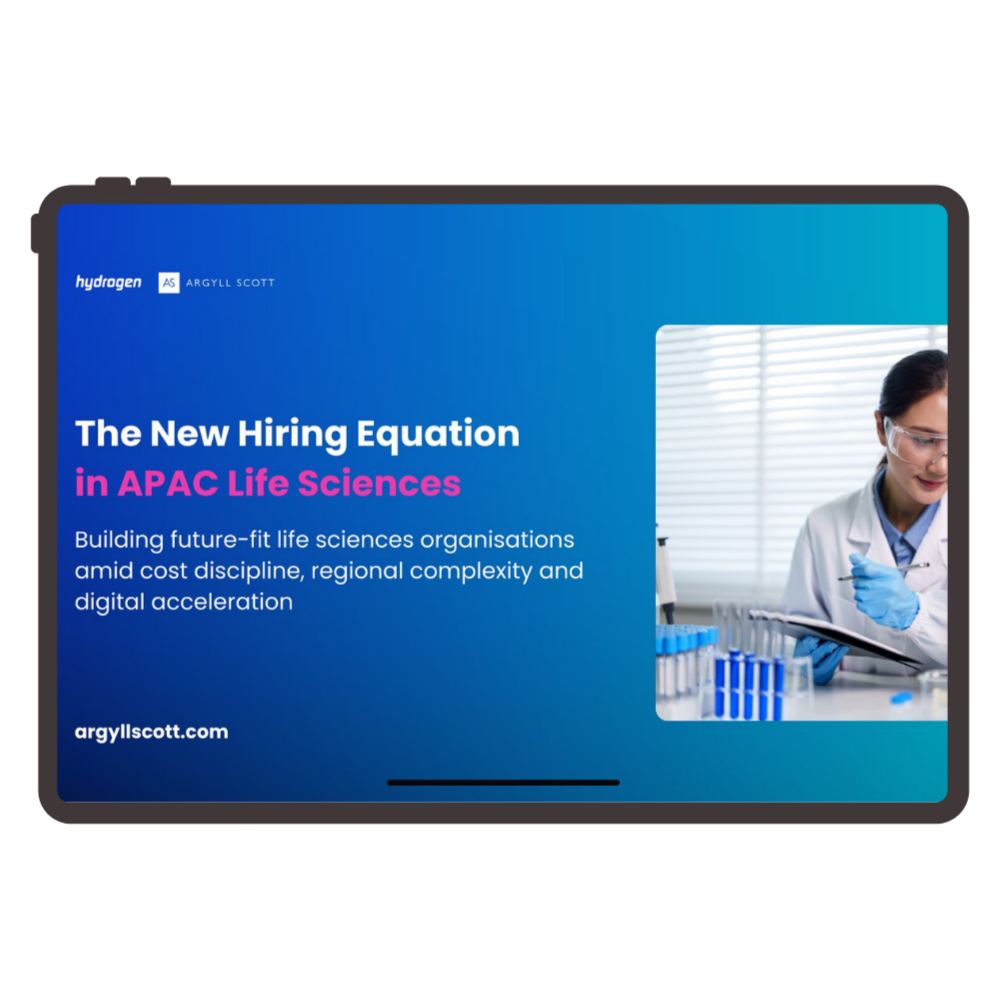
👉 Our whitepaper The New Hiring Equation in APAC Life Sciences explores this shift in depth and includes a practical organisational resilience checklist for HR and business leaders.
The New Hiring Equation in APAC Life Sciences
Access your copy of The New Hiring Equation and the Organisational Resilience Checklist - a practical toolkit to help you hire smarter, strengthen capability, and future-proof your teams in an uncertain market.

By submitting this form, I confirm that I have read and accept the Terms and Conditions and understand the Privacy Policy.